

The short answer
See an orthopedic doctor first if your pain started with a fall, an accident or a hard knock in sport and you have swelling, bruising, a joint that looks out of shape, or you can't put weight on the leg or use the arm. Go straight to an emergency for the warning signs listed further down. See a physiotherapist first for most back, neck, shoulder and knee pain that built up gradually, from desk work, lifting, workouts or overuse, with no injury and no warning signs.
Many people end up needing both: the orthopedic doctor to diagnose or operate, and the physiotherapist to rebuild movement and strength. At Dynamics Mend in Sector 52, Noida, the first thing we check in every assessment is whether you should be seeing a doctor instead. If the answer is yes, we tell you, and we tell you which kind of doctor.

Illustration: the doctor reads the scan, the physiotherapist plans the rehab. Most good recoveries need both.
What an orthopedic doctor does, and what a physiotherapist does
Both work with bones, joints and muscles, which is why the choice feels confusing. But they are trained for different jobs.
Orthopedic doctor (orthopedic surgeon)
- A medical doctor (MBBS) with a specialist degree in orthopaedics, such as MS or DNB
- Diagnoses fractures, dislocations, ligament and cartilage tears, joint infections and other medical problems, using examination, X-rays, MRI and blood tests
- Prescribes medicines, gives injections, applies plaster casts and performs surgery
- Usually sees you for a consultation, then follow-ups every few weeks
Physiotherapist
- Trained in movement, exercise and rehabilitation (BPT, often with an MPT specialisation)
- Assesses how you move: joint range, muscle strength, posture, balance, and nerve signs such as tingling or numbness
- Treats with hands-on therapy, guided exercise, taping, and dry needling or electrotherapy (TENS, IFT) where they help
- Does not prescribe medicines or operate. A physiotherapist can suspect a fracture or a tear from the examination, but confirming it needs a scan and a doctor
- Sees you regularly, often two or three times a week, and changes your plan as you improve
Think of it this way. The orthopedic doctor finds out what is broken or damaged and treats what needs medical or surgical care. The physiotherapist gets the whole system moving and strong again, and teaches you how to keep it that way.
When to see an orthopedic doctor (or the emergency) first
See a doctor before booking physiotherapy if any of these apply to you:
- A fall, accident or hard sports impact followed by swelling, bruising, a joint that looks deformed, or pain so bad you can't put weight on the leg or use the arm
- A knee or other joint that keeps locking or giving way after a twisting injury
- A hot, red, swollen joint, or joint pain with fever
- Pain that wakes you every night and does not ease in any position, or pain with unexplained weight loss or a history of cancer
- Numbness or weakness that is getting worse, such as a foot that drags or a hand that keeps dropping things
- A child with a new limp, joint pain with fever, or pain after a fall
- Severe or increasing pain, or a wound that looks infected, after an operation. Call your surgeon first
When a physiotherapist is the right first stop
If none of the warning signs above apply, starting with a physiotherapist is usually a sensible and safe choice for:
- Lower back or neck pain from sitting, driving, lifting or sleeping awkwardly. See our back pain treatment and neck pain treatment pages
- A stiff, painful shoulder that has slowly got worse, including early frozen shoulder
- Knee pain on stairs, when squatting or running, without a twisting injury
- Tennis elbow, heel pain from plantar fasciitis and other overuse pain
- Muscle strains and minor sprains from the gym or sport, where you can still walk on it or move the joint
- Posture-related pain, and headaches that start in the neck
- Pain your doctor has already called muscular, with advice to do physiotherapy
Guidelines for low back pain without warning signs recommend staying active and starting exercise-based care early, and advise against routine scans. For this kind of pain, a physiotherapist is often the quickest way to get started, without paying for a scan you may not need.
Do you need an X-ray or MRI first?
Usually not, for everyday back, neck and joint pain without warning signs. Scans are excellent at showing broken bones and serious problems. But they also show many changes that are normal with age, such as disc bulges and "wear and tear", in people who have no pain at all. A report full of worrying words can add to your fear without changing the treatment.
A scan is worth it when the examination points to a fracture, a significant ligament or cartilage tear, a nerve problem that is getting worse, or anything serious, or when pain is not improving after a few weeks of proper treatment. If your physiotherapist thinks you need one, they should explain why and point you to a doctor who can order and read it.
Already have a scan? Bring it to your first session. It helps, even if it doesn't decide everything.
How physiotherapists and orthopedic doctors work together
The best recoveries usually come when each does their part. Common examples we see in Noida:
- After a fracture: the orthopedic doctor sets the bone and decides when the cast comes off. Physiotherapy then restores movement, strength and walking
- After knee replacement or ACL surgery: the surgeon performs the operation, and the weeks of rehab afterwards, which shape how well the knee works, are physiotherapy. Read our guide to physiotherapy after knee replacement
- Slip disc and sciatica: most people improve without surgery through structured physiotherapy, while the doctor watches for nerve warning signs and manages medicines. See slip disc treatment without surgery
- Frozen shoulder: the doctor may suggest an injection in the painful phase, and physiotherapy brings the movement back
If you are already under an orthopedic doctor, physiotherapy should follow their instructions, for example on how much weight a healing bone can take. Bring your prescription and discharge papers to the first session.
What happens at your first physiotherapy visit
Here is what to expect at our Sector 52 clinic, so there are no surprises:
- Questions first: how the pain started, what makes it better or worse, your work and sport, and screening questions for the warning signs above
- Examination: movement, strength and posture, plus nerve tests (sensation, reflexes and muscle power) if the pain spreads into an arm or leg
- A clear explanation: what we think is going on, in plain words, and whether physiotherapy is the right fit
- A referral if needed: if anything points to a doctor or a scan, we tell you the same day and suggest the right specialist
- Treatment and a plan: if physiotherapy is right, treatment starts in the same session, with a home exercise plan and a realistic estimate of how many sessions you may need
We also set a checkpoint. If you are not clearly improving within the first few weeks, we reassess and, where needed, refer you on. A physiotherapist who keeps treating you without progress is not doing you a favour.
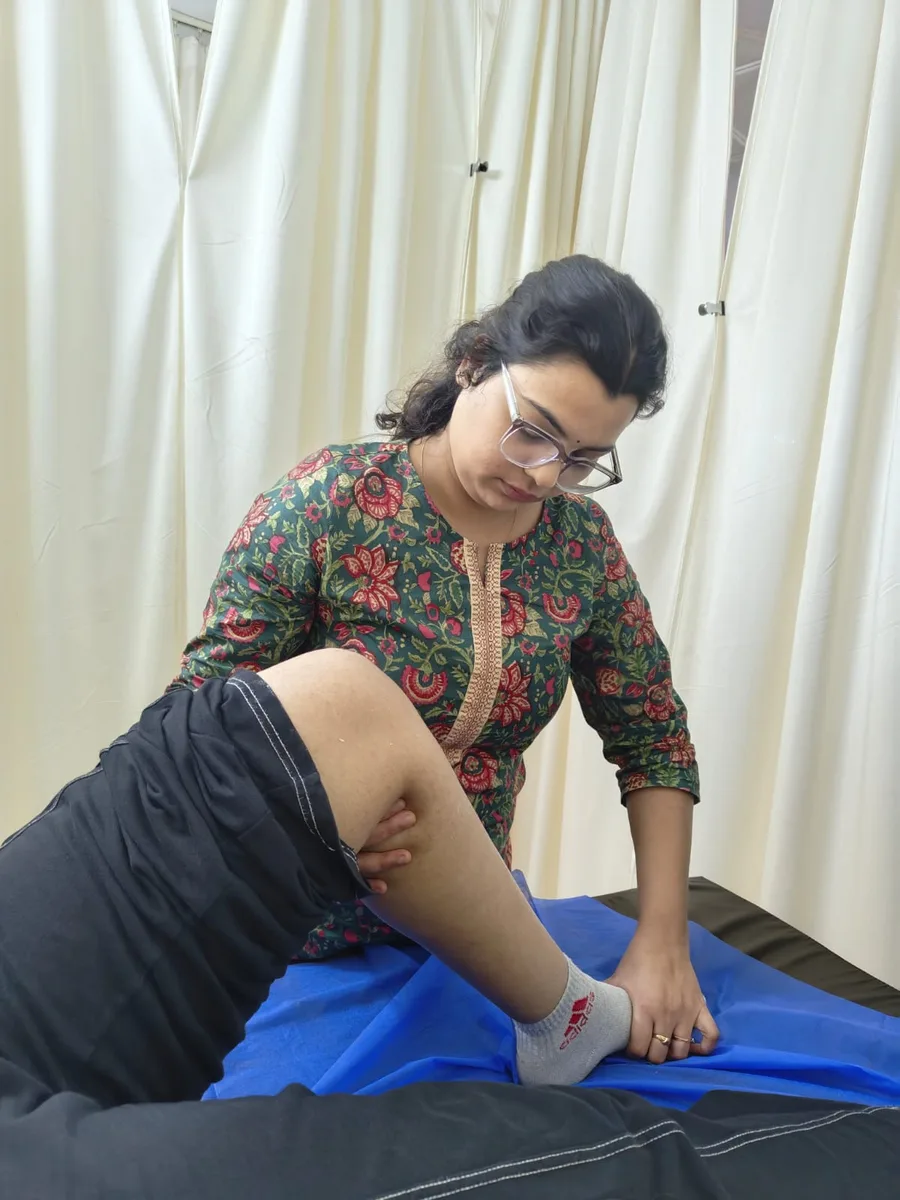
A knee examination at Dynamics Mend, Sector 52. Every first visit includes screening for signs that need a doctor.
Cost and time: what to expect
Orthopedic consultation fees in Noida vary by doctor and hospital, and scans add to the bill when they are needed. At Dynamics Mend, clinic physiotherapy sessions start from ₹500 and home visits start from ₹800, with no travel charge. The first 30-minute teleconsultation is free, so you can describe your problem and ask whether you should see a doctor first before you spend anything. The full rate card is on our pricing page.
Two cases from Noida
Illustrative examples based on cases we commonly see at the clinic. Names and details changed.
Neha, 31, works in IT in Sector 62. She had three weeks of neck pain after a deadline crunch, with tingling in two fingers of her right hand, and was ready to book an orthopedic doctor and an MRI. Her assessment showed no warning signs, and the nerve tests pointed to an irritated nerve in the neck rather than anything serious. We worked on desk breaks, neck and upper-back mobility, and gentle nerve-gliding exercises. The tingling eased over the next couple of weeks, and within about six weeks she was back to her normal routine, without needing a scan.
Rakesh, 56, from Sector 50. He twisted his knee stepping off a bus. It swelled within a few hours and kept catching when he walked. He came to us first, and we did not start treatment. A knee that swells quickly and locks after a twist needs imaging, so we referred him to an orthopedic doctor. His MRI showed a meniscus tear, and his doctor advised rehabilitation first. He came back to us for physiotherapy with the doctor's plan in hand.
Both got the right care sooner because the first person they saw knew where physiotherapy ends and medicine begins. Dr. Purti Shukla, who leads assessments at Dynamics Mend, holds a BPT and an MPT in Sports Physiotherapy, and refers patients to orthopedic doctors whenever a case needs medical care first.
Not sure who to see first?
Tell us what happened and how long it has hurt. We will call back and tell you honestly whether to start with physiotherapy or see a doctor first.
Frequently asked questions: physio or orthopedic doctor
Should I see an orthopedic doctor or a physiotherapist for back pain?+
For back pain that came on gradually, or after lifting or long sitting, with no fall or accident and no warning signs, a physiotherapist is a sensible first stop. See a doctor first if the pain followed a fall or accident, or comes with fever, unexplained weight loss, numbness or weakness that is getting worse, or pain that wakes you every night. Go to an emergency straight away for new numbness around the genitals or buttocks, or new problems controlling urine or stool.
Can a physiotherapist diagnose a fracture?+
A physiotherapist can suspect a fracture from how the injury happened and from the examination, but confirming it needs an X-ray and a doctor. If we suspect a fracture at Dynamics Mend, we stop and refer you for imaging before any treatment.
Do I need a doctor’s referral to see a physiotherapist in Noida?+
Most private physiotherapy clinics in Noida, including Dynamics Mend in Sector 52, see patients directly without a referral. If you already have a doctor’s prescription, a scan or a discharge summary, bring it, because it helps us plan safely. Some insurance claims also need a doctor’s prescription.
Can a physiotherapist prescribe painkillers or order an MRI?+
No. Physiotherapists in India do not prescribe medicines. If your physiotherapist thinks you need medicine, an injection or a scan, they should explain why and point you to a doctor who can prescribe or order it.
I have already seen an orthopedic doctor. Should I still do physiotherapy?+
Often, yes. Orthopedic doctors commonly advise physiotherapy for back pain, frozen shoulder and knee arthritis, and after fractures and surgery. Bring their prescription to your first session and follow any limits they set, such as how much weight a healing bone can take.
How do I know if physiotherapy is working, or if I should go back to the doctor?+
You should notice some improvement in pain, movement or what you can do within the first few weeks. If you are not clearly better by then, or new symptoms appear, a good physiotherapist reassesses you and refers you to a doctor. At Dynamics Mend we set this checkpoint at the first visit.
Not sure if you need a doctor or a physio?
Start with the free 30-minute teleconsultation. Tell us what happened, and we will tell you honestly whether to see a doctor first or start physiotherapy.
Open: 10 AM to 9:30 PM, Friday closed · E-132, E-Block, Sector 52, Noida 201301