
Roughly half or more of pregnant women get lower back pain at some point, and about one in five get pelvic girdle pain, the pain at the back of the pelvis or over the pubic bone. Most are told it is just part of being pregnant. It is common, yes. But common does not mean you have to simply put up with it until the baby arrives.
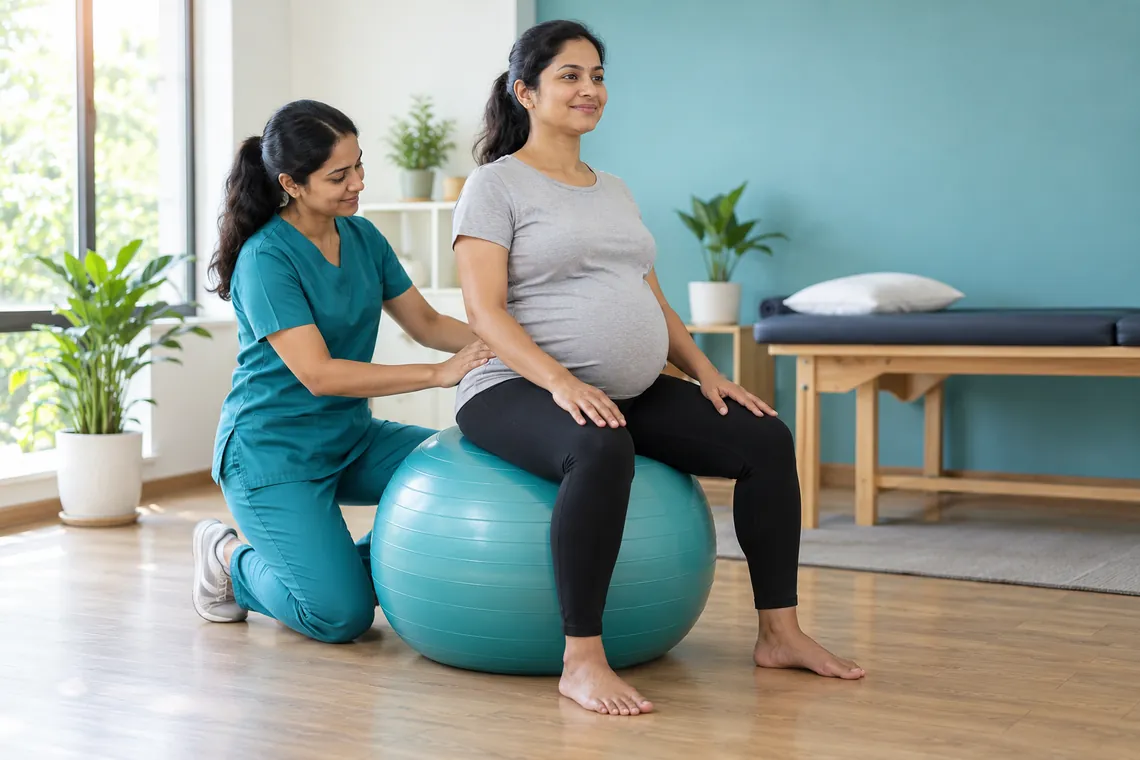
What Pregnancy Physiotherapy Can Help With
Your body changes fast in nine months. Hormones loosen the ligaments around the pelvis, the growing bump shifts your balance forward, and the deep tummy and pelvic floor muscles are stretched. Different joints complain at different stages.
- Lower back pain, especially after standing or sitting for long, or by evening
- Pelvic girdle pain (also called SPD): pain at the back of the pelvis, in the hips or over the pubic bone when you walk, climb stairs, turn in bed or stand on one leg
- Sciatica-type pain: an ache or shooting pain into the buttock and down the leg
- Upper back, rib and neck ache as your posture changes
- Tingling or numb hands (carpal tunnel symptoms), often worse at night
- Leg cramps and swollen feet and ankles
- Leaking urine when you cough, sneeze or laugh
- Getting ready for delivery and for recovery afterwards
Swelling and leaking are also things your doctor should know about. We work on the muscle and movement side, and we tell you plainly when something needs your gynaecologist and not a physiotherapist.
Is Physiotherapy Safe During Pregnancy?
For a normal, healthy pregnancy it is generally considered safe. Obstetric guidelines encourage regular moderate exercise in pregnancy unless your doctor has advised against it, and exercise-based physiotherapy is a standard, low-risk first step for pregnancy back and pelvic pain. What changes is how it is done.
- Positions are adapted. Side-lying, sitting or propped up on pillows. After the first trimester we do not keep you flat on your back for long.
- No electrotherapy machines or deep heat (such as IFT, TENS, ultrasound or laser) during pregnancy.
- No dry needling or cupping at any stage of pregnancy.
- No internal examinations. Everything is checked from the outside, and you stay fully clothed.
- No forceful joint manipulation, and no breath-holding or straining exercises.
- Gentle hands-on work, and nothing is done without explaining it first.
When we ask for your gynaecologist's go-ahead first. If your doctor has told you that your pregnancy is high-risk, for example placenta praevia, high blood pressure or pre-eclampsia, bleeding, waters that have broken, a cervical stitch, a risk of early labour, a baby measuring small, severe anaemia or a heart or lung condition, please get your gynaecologist's go-ahead before you book, and bring their advice with you. In some of these situations exercise is not appropriate, and we will tell you so instead of treating.
What a Session Looks Like, Trimester by Trimester
Assessment
We ask which week you are in, what your doctor has said, and what exactly hurts and when. Then we check your posture, how you walk, the joints of the pelvis and lower back, and your tummy and pelvic floor control from the outside, all in positions that are comfortable for you. Bring your antenatal file or latest scan report.
First Trimester
Usually light: posture, gentle mobility, breathing, and how to stay active while tiredness and nausea are at their worst. Many women start physiotherapy later, but if something hurts now you do not have to wait for the second trimester.
Second Trimester
A good window for building strength: hips, back and deep tummy muscles, pelvic floor training, and a plan for back or pelvic girdle pain before the bump is at its heaviest.
Third Trimester
The focus moves to comfort: sleeping and turning positions, easing rib, back and pelvic pain, cramps and swollen feet, breathing, and comfortable positions for the last weeks.
You go home with a short routine of 10 to 15 minutes a day, written down, and clear do's and don'ts for sitting, sleeping, lifting and stairs.
Back or pelvic pain in pregnancy?
Call or WhatsApp us with your week and what hurts. We call back within 30 minutes during clinic hours. Bleeding, leaking fluid, strong tummy pain or a baby moving less than usual cannot wait for a callback. Go straight to your maternity hospital.
Pelvic Girdle Pain and Back Pain in Pregnancy
Pelvic girdle pain, which you may also hear called symphysis pubis dysfunction or SPD, is pain in the joints that hold the pelvis together. It can sit at the back, on one or both sides, or right at the front over the pubic bone, and it often clicks or catches. It is not harmful to your baby, but it can make walking, stairs and sleep miserable. These habits protect the joints from day one:
- Sleep on your side with a pillow between your knees and another under the bump
- Keep your knees together when you turn in bed or get out of a car
- Sit down to put on trousers, shoes and socks
- Take stairs one step at a time, leading with the less painful leg on the way up
- Avoid standing on one leg, pushing heavy trolleys and sitting cross-legged if these set it off
- Take shorter steps, and rest before the pain builds, not after
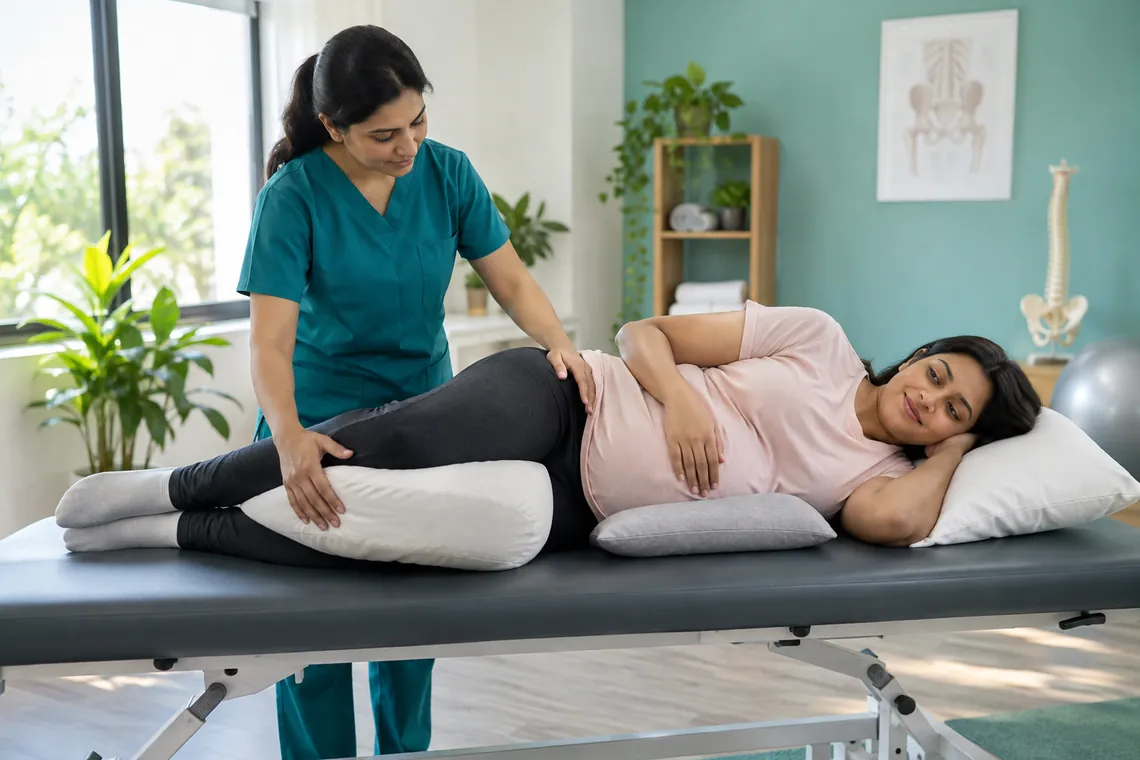
The habits protect the joints. The exercises, which we choose after assessing you, do the longer work: strengthening the hips, deep tummy muscles and pelvic floor so the pelvis is better supported. A pelvic support belt helps some women, and we will tell you whether it is worth trying and how to wear it.
For most women pelvic girdle pain settles in the weeks to months after delivery. Good care during pregnancy is about keeping you moving and sleeping, not about a cure before the baby comes. For back pain outside pregnancy, see back pain treatment in Noida.
Exercise in Pregnancy: What Is Safe, What to Skip
If your pregnancy is uncomplicated, the general advice is about 150 minutes of moderate activity a week, spread over most days. Moderate means you can still hold a conversation while doing it. If you were not active before, start with 10 to 15 minutes and build up.
- Usually fine: walking, swimming, stationary cycling, light strength work, pregnancy yoga without deep twists, and pelvic floor exercises
- Skip: contact sports and anything with a risk of falling
- Skip: exercising in heat, including hot yoga
- Skip: lying flat on your back for long after the first trimester
- Skip: holding your breath while lifting, and crunches or double leg raises as the bump grows
Stop exercising if you feel dizzy or faint, are short of breath before you even start, get a headache, tummy pain or tightenings, or your legs feel weak or unsteady. If it does not settle after a few minutes of rest, or it keeps coming back, call your doctor the same day. The warning signs in the box below mean stop and get medical help straight away.
When to Call Your Doctor, Not Us
⚠️ These are not physiotherapy problems
Emergency. Go to your maternity hospital or the nearest hospital now, or call 112, if you have:
- Bleeding from the vagina, or fluid leaking or gushing
- Regular painful contractions or strong cramping before 37 weeks
- A baby who is moving less than usual
- Severe tummy pain that does not ease when you rest, a tummy that stays hard and painful, or fainting along with pain or bleeding. In the first three months, sharp pain low on one side of the tummy or pain at the tip of the shoulder
- A severe headache that does not go, blurred vision or flashing lights, sudden swelling of the face, hands or feet, or pain high in the tummy or just under the ribs
- Chest pain, sudden breathlessness, coughing up blood, or pain, swelling, warmth or redness in one calf or leg
- Back or leg pain with numbness around the genitals or back passage, new trouble passing urine, loss of bladder or bowel control (not the small leak on a cough or sneeze), or a leg or foot that is getting weaker
Call your gynaecologist the same day if you have:
- Fever, or burning when you pass urine
- A faint or dizzy feeling that keeps coming back
- A fall or a knock to the tummy
- Strong itching, especially on the palms and soles
- Back or pelvic pain that is constant and does not change with position or rest
We ask about these at every visit. If anything does not look like a muscle or joint problem, we stop and send you to your doctor.
Cost of Pregnancy Physiotherapy in Noida
Sessions at our Sector 52 clinic are ₹500 to ₹800, with the assessment included. Home sessions in the sectors near the clinic start at ₹800 with no travel charge. How many sessions you need depends on the problem: some women come once or twice for an assessment and a home routine, others come regularly through the second and third trimester.
| Service | Dynamics Mend |
|---|---|
| Assessment on the first visit | Included |
| Session at the Sector 52 clinic | ₹500 to ₹800 |
| Written home routine | Included |
| Home visit (sectors near the clinic) | From ₹800 |
Note: Indicative pricing. The fee depends on the session and whether it is at the clinic or at home. See all physiotherapy charges and physiotherapy at home in Noida.
What to Expect at Dynamics Mend
Female physiotherapist-led. Dr. Purti Shukla, BPT, MPT (Sports), leads the assessment and treatment.
Private assessment room. Nothing is rushed, and nothing is examined without your consent.
Alongside your gynaecologist. We are physiotherapists, not obstetricians. Your antenatal check-ups continue as normal, and we follow any restrictions your doctor has given.
Comfortable positions. Side-lying, sitting or propped up, with pillows. You are not left flat on your back for long.
Home sessions near Sector 52 from ₹800, with a female physiotherapist, useful in the last weeks when travel is tiring.
One fee per session, no add-on charges.
After the Baby Arrives
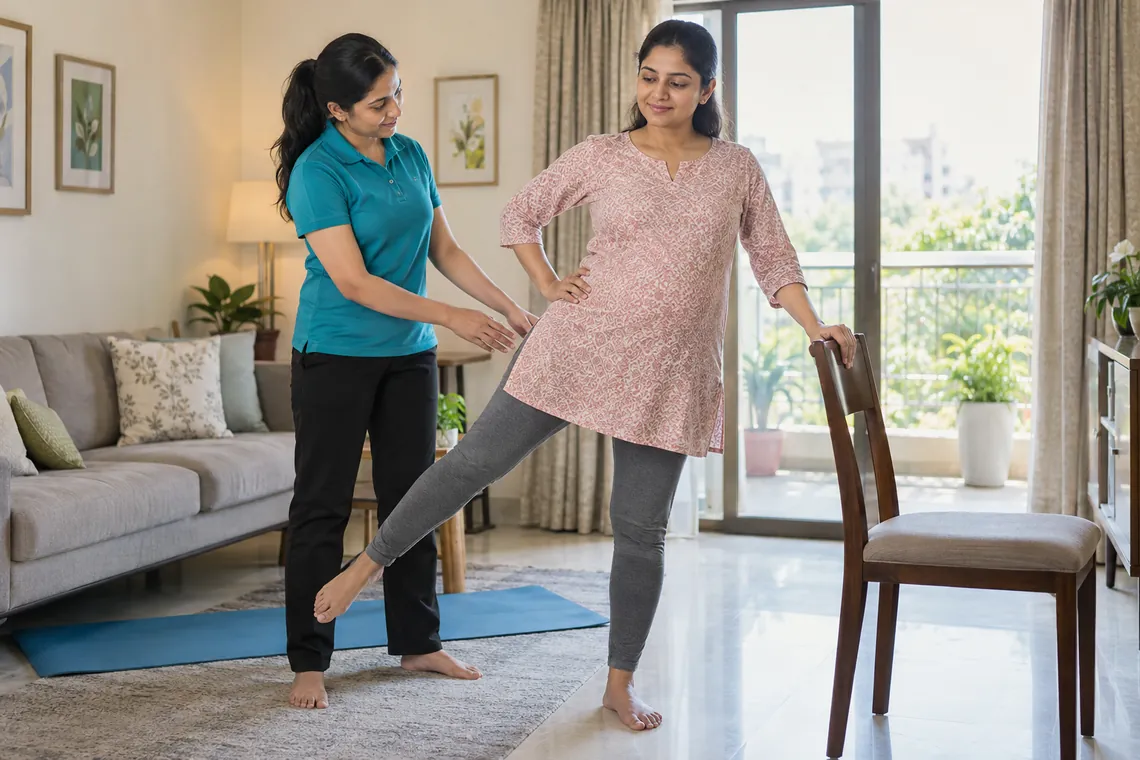
This page covers care during pregnancy. After delivery, when you start again depends on the type of delivery and your doctor's clearance. Our postpartum recovery guide explains the stages, diastasis recti treatment covers an ab gap after pregnancy, and the full list is on our women's physiotherapy service in Noida page.
Frequently Asked Questions
Plain answers to common questions about physiotherapy in pregnancy.
1. Is physiotherapy safe during pregnancy?+
2. From which month can I start physiotherapy in pregnancy?+
3. Do I need my gynaecologist's permission for physiotherapy during pregnancy?+
4. What is pelvic girdle pain (SPD) in pregnancy, and can physiotherapy help?+
5. Which exercises should I avoid during pregnancy?+
6. Can physiotherapy help with leaking urine in pregnancy?+
7. Is there a female physiotherapist for pregnancy care in Noida?+
8. Do you do pregnancy physiotherapy at home?+
9. How much does pregnancy physiotherapy cost in Noida?+
Book a Pregnancy Physiotherapy Assessment
Sector 52, Noida. At our clinic or at your home. Tell us your week and what hurts, and we call back within 30 minutes during clinic hours. For anything in the warning list above, go to your maternity hospital and do not wait for our call.
This page is general information, not medical advice for your pregnancy. Your gynaecologist's advice comes first. Images on this page are illustrative and do not show real patients. Sources: ACOG Committee Opinion 804, Physical Activity and Exercise During Pregnancy and the Postpartum Period (2020). Liddle SD, Pennick V, Interventions for preventing and treating low-back and pelvic pain during pregnancy, Cochrane Database of Systematic Reviews (2015). Vleeming A et al., European guidelines for the diagnosis and treatment of pelvic girdle pain, European Spine Journal (2008). Woodley SJ et al., Pelvic floor muscle training for preventing and treating urinary and faecal incontinence in antenatal and postnatal women, Cochrane Database of Systematic Reviews (2020).