
What Are the 4 Stages of a Slipped Disc (PIVD)?
A slipped disc (PIVD) moves through four stages: disc bulge, where the disc loses shape and bulges slightly while the inner gel stays contained; protrusion, where it pushes further against the outer wall; extrusion, where the inner gel breaks through the outer layer; and sequestration, where a fragment separates into the spinal canal. Stages 1 and 2 usually recover fully with physiotherapy, without surgery.
If this is your first time dealing with a slip disc, it's completely natural to feel confused, overwhelmed, and a little anxious. One moment it's just back pain, the next, you're caught in a loop of endless questions, trying to make sense of what's really happening to your body.
If that sounds familiar, you might be dealing with what's medically called a Herniated Disc or PIVD (Prolapsed Intervertebral Disc). The honest truth: the questions don't seem to end, and that's exactly where the right guidance matters. When you're in pain, what you really need isn't just answers, but clarity, reassurance, and a treatment approach that actually works for you.
What is a Slip Disc (PIVD)?
Your spine is made up of small bones separated by soft discs that act like cushions. When one of these discs gets damaged or pushed out of place, it can press on nearby nerves, causing pain, numbness, or weakness.
This condition is commonly called a slip disc, but medically, it progresses through four stages. Each stage requires a different treatment approach, and that's exactly what we'll walk through below.
Understanding which stage you're at is the single most important step in your recovery. Stages 1 and 2 are usually fully reversible with consistent physiotherapy. Stage 3 takes longer but is still mostly non-surgical. Stage 4 is the only one where surgery may genuinely become necessary, and even then, post-surgical rehab is still physiotherapy-led.
The 4 Stages of Slip Disc
From early bulge to severe sequestration, and the right physiotherapy at each stage.
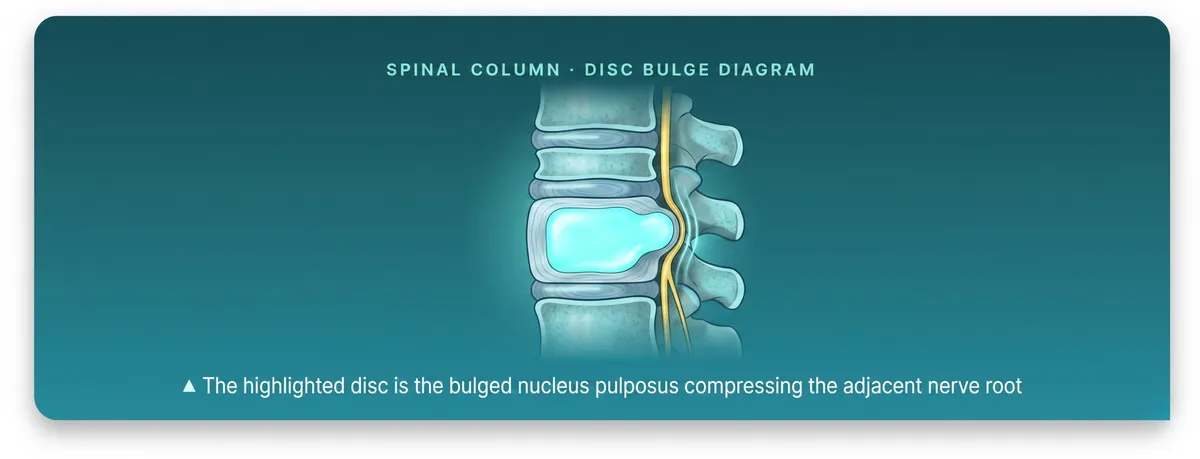
The illustration above shows an early bulge. Use the four stage cards below to match the grade written on your MRI report, which radiologists record as bulge, protrusion, extrusion or sequestration; each card explains what that grade means for pain, nerve symptoms and the physiotherapy that fits it.
Disc Bulge
What's happening? The disc begins to lose its shape and slightly bulges outward, but the inner gel is still contained.
Common symptoms of a disc bulge
- Mild lower back pain
- Stiffness after sitting for long hours
- Occasional discomfort while bending or lifting
Physiotherapy that works for a disc bulge
- Posture correction & ergonomic guidance
- Gentle stretching & mobility exercises
- Core strengthening to support the spine
- Activity modification to reduce strain
Disc Protrusion
What's happening? The disc bulge becomes more pronounced and may start pressing on nearby nerves.
Common symptoms of a disc protrusion
- Increased back pain
- Pain radiating to hips or legs
- Tingling or numbness
Physiotherapy that works for a disc protrusion
- Targeted physiotherapy exercises for slip disc
- Manual therapy to reduce stiffness
- Neural mobilisation to relieve nerve pressure
- Heat therapy or electrotherapy for pain
Disc Extrusion
What's happening? The inner gel, the nucleus, starts leaking out of the disc, causing significant nerve irritation.
Common symptoms of a disc extrusion
- Sharp, shooting pain (sciatica)
- Numbness or weakness in the legs
- Difficulty standing, walking, or sitting
Physiotherapy that works for a disc extrusion
- Advanced pain-relief physiotherapy
- McKenzie / directional preference exercises
- Core stabilisation & spine unloading
- Functional rehab to regain daily activity
Disc Sequestration
What's happening? A fragment of the disc breaks off and moves into the spinal canal, causing severe nerve compression.
Common symptoms of disc sequestration
- Intense and persistent pain
- Loss of strength in the limbs
- Difficulty in basic movements
Physiotherapy that works for disc sequestration
- Pain management & inflammation control
- Assisted movement therapy
- Gradual rehabilitation program
- Post-surgical rehab (if surgery is advised)
Why Physiotherapy is the Best Treatment for Slip Disc
Many people believe surgery is the only solution. That's not true. Physiotherapy is widely considered the best and most effective non-surgical treatment for slip disc in 2026. Our complete ortho physiotherapy programme handles disc and spine cases at every stage, and if surgery is genuinely needed, our post-surgical rehab programme picks up from day one. The same staged approach we use here also drives our post-stroke recovery work. In Stage 3 and Stage 4 cases where the disc fragment causes lasting nerve damage, the recovery shifts from ortho to neuro physiotherapy, addressing weakness, sensation loss, and movement retraining in affected limbs. In most cases, structured physiotherapy focuses on:
- Treating the root cause, not just the symptoms
- Strengthening the muscles that support your spine
- Improving posture and movement patterns
- Preventing recurrence over the long term
With the right physiotherapy treatment, most patients recover without surgery. Our detailed guide on whether a slip disc can heal without surgery covers exactly how that works, what the research says, and when an operation is truly needed.
Slip Disc in Young Adults: Why Cases Are Rising in 2026
A few years ago, slip disc was something we mostly saw in people above 40. Today, more individuals in their 20s and early 30s are walking into clinics with the same condition, and often at a more severe stage. Here's why:
- Sedentary lifestyle with long hours of sitting
- Poor posture from excessive mobile and laptop use
- Incorrect gym practices and lifting without proper technique
- Ignoring early signs like mild back pain or tingling
- Overdependence on painkillers instead of root-cause treatment
- Stress-related muscle tightness and spinal imbalance
- Weak core muscles and a lack of conditioning
- Unhealthy work-from-home ergonomics
- Lack of awareness about preventive spine care
The good news: with timely physiotherapy and lifestyle correction, most cases can still be managed effectively without surgery.
Not sure which stage you're at?
Book a detailed assessment with our team. We review your MRI & X-rays, run the clinical tests, and give you an honest answer, no upselling.
Warning Signs & Do's / Don'ts
Your body gives clear signals before a slip disc becomes serious.
⚠ 7 Warning Signs to Watch
Knowing your stage is half the work, doing the right exercises for it is the other half. We have written a complete stage-wise companion to this guide, PIVD physiotherapy exercises: what to do at each stage, with the safe list, the avoid list and the progression criteria for every phase of recovery.
And when you are ready to start treatment rather than just read about it, see our PIVD physiotherapy treatment in Noida page for the full programme, charges and what your first session looks like at Sector 52.
Do's & Don'ts During Treatment
✓ Do's
- Follow guided physiotherapy exercises
- Maintain correct posture while sitting and sleeping
- Stay active with controlled movements
- Use heat or ice as advised by your physiotherapist
✕ Don'ts
- Don't rely only on painkillers
- Avoid prolonged bed rest
- Don't lift heavy weights or bend incorrectly
- Avoid self-treatment without expert guidance
Cost of Slip Disc Physiotherapy in Noida
When you're already dealing with pain, the last thing you want is confusion around treatment costs. The good news: physiotherapy for slip disc is not only effective but far more affordable than surgical or hospital-based treatment, especially when you choose the right clinic.
Many hospitals or premium setups charge separately for every small add-on, which makes the overall cost balloon. At Dynamics Mend, the focus is on complete care, not fragmented treatment, a comprehensive physiotherapy + rehabilitation approach within one reasonable price.
If the acute pain makes travelling impossible in the first week or two, we also offer physiotherapy at home in Noida from ₹800 per visit, and our back pain physiotherapy in Noida page explains how clinic sessions are structured.
Cost comparison: clinics vs hospitals vs Dynamics Mend
| Treatment Component | Hospitals / Premium Clinics | Dynamics Mend |
|---|---|---|
| Consultation & Assessment | ₹500 – ₹1,500 | Included |
| IFT / TENS Therapy | ₹300 – ₹800 / session | Included |
| Heat / Cold Compress | ₹200 – ₹500 | Included |
| Manual Therapy | ₹500 – ₹1,200 | Included |
| Dry Needling | ₹800 – ₹2,000 | Included (if required) |
| Rehab Exercises Guidance | Often charged separately | Included |
| Per-Session Cost | ₹800 – ₹2,500+ | ₹500 – ₹800 only |
Note: Indicative pricing, may vary based on individual treatment requirements and current market scenario.
What makes Dynamics Mend different
You're not paying for individual therapies separately.
You get a complete recovery plan under one roof.
Every session combines therapies based on your condition.
Focus is on long-term recovery, not temporary pain relief.
Available slots for emergencies.
Affordable enough that you can stay consistent, without financial stress.
Slip disc recovery is not a one-day process. It requires consistency, guided rehab, and multiple sessions. When every session is affordable, it becomes easier to stay committed to your recovery.
How Dynamics Mend Helps You Recover
A structured, step-by-step rehabilitation plan, personalised to your condition, pain level and lifestyle.
Pain Relief & Inflammation Control
Advanced modalities like IFT and TENS to reduce pain and nerve irritation. Gentle movement and positioning to avoid stiffness.
Muscle Relaxation & Mobility
Dry needling for deep muscle tension and trigger points. Cupping therapy to release paraspinal tightness and improve circulation. Manual therapy and guided stretches to restore movement.
Strengthening & Stability
Core strengthening, spinal stabilisation and posture correction. Each exercise supervised for safety and effectiveness.
Functional Recovery & Prevention
Body mechanics, posture and lifestyle modifications. Goal: not just recovery, but long-term prevention.

Dr. Purti Shukla · MPT (Sports)
“Care should feel both accessible and meaningful for every patient. It's not about the time spent in a session, it's about how effective and reassuring that time truly is. Even a 40-minute session is approached with complete focus, ensuring each day brings you closer to relief and recovery. Sometimes, healing begins with feeling heard and supported as much as it does with the right treatment.”
Final Thoughts
A slip disc may feel overwhelming, but it does not mean the end of your active life. What truly matters is:
- Understanding your stage
- Choosing the right physiotherapy treatment
- Staying consistent with your rehabilitation plan
The sooner you start, the faster you recover.
Ready to begin your recovery?
Sector 52, Noida, or at your doorstep. Talk to our team and let's figure out the right plan together.
Or request a callback, we'll reach out in 30 minutes
Free consultation. No obligation. Honest assessment.
Frequently Asked Questions
1. What are the 4 stages of a slipped disc (PIVD)?+
The four stages are disc bulge, protrusion, extrusion, and sequestration. Each stage shows how far the inner disc material has moved out of place, from a mild bulge in stage 1 to a broken-off fragment in stage 4. Stages 1 and 2 are the most common and usually improve with physiotherapy, without surgery.
2. How long does physiotherapy take for a slipped disc?+
Mild to moderate PIVD often shows real relief within 4 to 6 weeks of consistent physiotherapy, though full recovery can take a few months. The exact time depends on the stage, your age, and how early treatment starts. Stage 1 and 2 cases recover fastest, while stage 3 takes longer but is still mostly non-surgical.
3. Is heat or ice better for slip disc pain relief?+
Both have a role, but the right choice depends on the stage. Ice therapy is recommended in the early stage; it reduces inflammation, swelling and sharp pain by numbing the affected area. Heat therapy is more effective for chronic back pain, it relaxes tight muscles, improves blood circulation and reduces stiffness. A qualified physiotherapist will assess your condition and guide you on which works better for faster recovery.
4. When should I see a physiotherapist for slip disc pain?+
As soon as you notice persistent lower back pain that lasts more than a few days, especially if it's affecting your daily routine. Warning signs like radiating pain (sciatica), numbness, tingling, muscle weakness or restricted movement indicate the condition may be progressing. Early intervention helps reduce pain, prevent further disc damage and avoid complications like nerve compression. The sooner you start, the faster you recover, without long-term medication or invasive procedures.
5. Is home physiotherapy effective for slip disc treatment?+
Yes, home physiotherapy in Noida is a strong option, especially for patients with severe pain, limited mobility or difficulty travelling. It ensures personalised, one-on-one care tailored to your specific condition. At Dynamics Mend, we bring expert treatment to your doorstep. This eliminates daily travel, long waiting times and physical strain, making it easier to stay regular with sessions. With guided exercises, pain management and continuous monitoring, patients receive the same quality care as in the clinic, but in the comfort of home.
6. Is slip disc treatment expensive in Noida?+
It doesn't have to be, especially when you choose physiotherapy over surgery. Many hospitals charge therapies separately. At Dynamics Mend, sessions typically range between ₹500 and ₹800 and include pain management, rehab exercises and personalised care under one fee. This makes it easier to stay consistent with recovery without financial stress.
7. Can a slip disc heal completely with physiotherapy?+
In most cases, yes. Physiotherapy reduces pain, improves spinal alignment, strengthens supporting muscles and restores mobility. Healing time varies, but many patients recover fully and return to normal activities without needing surgery when they follow a proper rehab plan.
8. How many sessions are required for slip disc recovery?+
It depends on the severity and stage. On average, patients require 2 to 4 sessions per week for a few weeks, followed by a structured home exercise program. A physiotherapist will design a personalised plan based on your progress and condition.
9. What's the fastest way to recover from a slip disc without surgery?+
A combination of early physiotherapy, guided exercises, posture correction and activity modification. Instead of relying only on rest or painkillers, a structured plan reduces inflammation, strengthens core muscles and relieves nerve pressure. Consistency is key, most patients see significant improvement under expert supervision.
10. Which exercises should be avoided in slip disc?+
Avoid exercises that put excessive pressure on your spine: heavy weight lifting, forward bending, toe-touching, sit-ups and high-impact activities. Incorrect workouts can worsen disc herniation and delay recovery. Always follow physiotherapy-approved exercises that are safe, controlled and tailored to your condition.
11. Which is the best physiotherapy clinic for slip disc treatment in Noida?+
Choose a clinic that offers personalised treatment, advanced therapies (IFT, TENS, dry needling) and guided rehabilitation. At Dynamics Mend, Dr. Purti Shukla and her team focus on root-cause treatment, patient-specific rehab plans and consistent care, combining clinical expertise with compassionate care so every patient feels supported throughout their recovery.
Dr. Purti Shukla
Dr. Purti Shukla holds an MPT in Sports Physiotherapy and leads the clinical team at Dynamics Mend, Sector 52, Noida. She specialises in root-cause treatment of disc-related conditions and has designed personalised rehab plans for hundreds of patients across the four stages of PIVD.