
If a stroke has just turned your life upside down, or someone you love is going through it right now, the first feeling is rarely pain. It is confusion. One moment everything is normal, and the next, lifting an arm, holding a glass, or standing up feels like a stranger has taken over the body.
That confusion is normal. What matters next is what you do with it.
This blog walks you through what really happens in the first 90 days after a stroke, and how the right physiotherapy plan, started at the right time, can rebuild movement, control, and confidence. No jargon, no false hope. Just the honest path that hundreds of post-stroke patients have walked before you.
What Is a Stroke and Why Does Recovery Look Different for Every Patient?
A stroke happens when the blood supply to a part of the brain is interrupted, either by a clot (ischemic stroke) or a burst vessel (haemorrhagic stroke). The affected area stops getting oxygen, and within minutes, the brain cells in that region start to die.
Depending on which part of the brain is affected, the deficits show up differently:
- Hemiplegia: complete paralysis on one side of the body
- Hemiparesis: weakness on one side of the body
- Aphasia: difficulty with speech and language
- Dysphagia: trouble swallowing
- Cognitive changes: memory, attention, and emotional control
This is why no two stroke recoveries look the same. Your treatment plan has to be built around your specific deficits, not a generic protocol that lands in your inbox.
But there is one thing every recovery has in common. The first 90 days are the most critical.
Why the First 90 Days After a Stroke Matter So Much
In the first 90 days after a stroke, the brain is in a state called heightened neuroplasticity. In simple words, the brain is actively trying to rewire itself, finding new pathways around the damaged area to take over the lost function.
This is also when the muscles are most responsive to retraining. After 90 days, neuroplasticity continues, but at a slower pace. So whatever ground you cover in the first three months has the biggest long-term impact on your recovery.
Peak Neuroplasticity Window
The brain is rewiring at maximum speed. Every supervised session counts.
Skipping or delaying physiotherapy in this window leads to:
- Muscle stiffness and joint contractures
- Permanent loss of joint range and function
- Poor balance, falls, and fear of walking
- Long-term dependence for daily activities
- Slower speech and swallowing recovery
This is why structured, supervised stroke rehabilitation, started within 24 to 72 hours of medical stabilisation, is non-negotiable.
The 3 Stages of Post-Stroke Recovery
From early bed rehab to walking back into daily life, here is how recovery progresses, and the physiotherapy that works at each stage.
Awakening Movement and Preventing Complications
What's happening? The body is in shock. The patient may feel weak, confused, or completely dependent for basic tasks. One side of the body may not respond. Speech, swallowing, or vision can be affected. The brain is just beginning to rebuild.
Common Challenges
- One-sided weakness or full paralysis
- Difficulty swallowing or speaking clearly
- Severe fatigue and emotional changes
- Bladder or bowel control issues
- Pressure sore risk from immobility
Physiotherapy That Works
- Passive range-of-motion exercises to prevent stiffness
- Bed mobility training (rolling, sitting up safely)
- Positioning and pressure-relief protocols
- Chest physiotherapy and breathing exercises
- Early swallowing and oromotor work
- Family training for safe handling at home
Rebuilding Strength, Coordination and Control
What's happening? This is when most patients start to see real movement returning. A finger twitches, the leg holds weight, balance starts coming back. The brain is forming new connections, and progress can feel uneven. But it is happening.
Common Challenges
- Spasticity or muscle tightness
- Poor coordination on the affected side
- Frustration with slow visible progress
- Balance issues while sitting or standing
- Difficulty with fine motor tasks
Physiotherapy That Works
- Task-specific strength training (sit-to-stand, weight shifts)
- Gait training with assistive devices
- Mirror therapy and motor imagery
- Constraint-Induced Movement Therapy (CIMT) for the affected arm
- Functional Electrical Stimulation (FES) for weak muscles
- Posture correction and core activation
Functional Independence and Confidence
What's happening? By now, most patients are walking with or without support, doing basic self-care, and getting back into a near-normal routine. The work shifts from "can I move it?" to "can I use it for real life?"
Common Challenges
- Endurance limits during walking
- Fine motor tasks (writing, buttoning, eating with one hand)
- Stair climbing and uneven surfaces
- Returning to work, driving, or social settings
- Confidence in public spaces
Physiotherapy That Works
- Advanced gait training (turns, stairs, outdoor walking)
- Hand function and dexterity drills
- Balance challenges on uneven surfaces
- Community mobility practice
- Strength and endurance conditioning
- Cognitive-motor dual-task training
Why Physiotherapy Is the Best Treatment for Stroke Recovery
Stroke recovery is not a single-medication problem. Tablets manage blood pressure, prevent another stroke, and reduce clot risk. But movement, balance, speech, swallowing, independence, none of these come from a tablet. They come from structured, repeated, supervised retraining. This is the same physiotherapy-led recovery model that we use across all stage-based rehab at Dynamics Mend.
Physiotherapy is the only treatment proven to:
- Drive neuroplasticity through repetition
- Prevent secondary problems like contractures and falls
- Restore real-world function, not just lab measurements
- Reduce long-term dependence on caregivers
- Cut hospital readmission risk
For the majority of post-stroke patients, the difference between regaining independence and remaining dependent is the consistency of physiotherapy in the first 90 days. For older patients, our geriatric physiotherapy guide covers the at-home support layer, and our broader neuro physiotherapy guide goes beyond just stroke.
Why Stroke Cases Are Rising in Younger Adults in 2026
A few years ago, stroke was a condition we mostly saw in patients above 60. Today, our clinic is seeing a clear rise in patients in their 30s and 40s. Here is why:
- Uncontrolled blood pressure and undiagnosed diabetes
- Sedentary work culture and long screen hours
- Smoking, vaping, and high alcohol use
- Chronic stress and poor sleep
- Unexplained clotting issues post-COVID
- Hidden cardiac problems and arrhythmias
- Use of recreational drugs and unsupervised steroids
- Family history that gets ignored
- Skipping annual health checks
The good news is that with timely physiotherapy and lifestyle correction, most younger stroke survivors can return to their previous level of function. In some cases, even better than before, because they finally start treating their body seriously.
Not sure which stage you're at?
Book a detailed neurorehab assessment with our team. We review your discharge summary and imaging, run the clinical tests, and give you an honest answer. No upselling.
Warning Signs and Do's & Don'ts
The brain leaves clear signals before and during a stroke. Spotting them in time saves lives, and saves function.
⚠ 7 Warning Signs of a Stroke. Act Immediately.
Do's & Don'ts During Recovery
✓ Do's During Recovery
- Start physiotherapy within 24 to 72 hours of stabilisation
- Stay consistent with daily home exercises
- Eat a heart-healthy, low-sodium diet
- Track blood pressure and sugar daily
- Stay socially and mentally active
- Sleep 7 to 8 hours every night
✕ Don'ts During Recovery
- Don't skip physiotherapy because progress feels slow
- Don't depend only on medication
- Don't spend long hours in bed once stable
- Don't avoid walking attempts because of fear of falling
- Don't ignore depression or sudden mood changes
- Don't try unverified home remedies for paralysis
Cost of Post-Stroke Physiotherapy in Noida
Stroke care can feel expensive, especially after weeks of hospital bills. The honest truth: structured outpatient or home physiotherapy is far cheaper than continued hospitalisation, and far more effective for long-term recovery.
Many hospitals and premium setups bill every small modality separately, so the final number balloons. At Dynamics Mend, the focus is complete care under one transparent fee, not 8 separate add-on charges.
Cost Comparison: Clinics vs Hospitals vs Dynamics Mend
| Treatment Component | Hospitals / Premium Clinics | Dynamics Mend |
|---|---|---|
| Neuro Assessment & Plan | ₹800 to ₹2,000 | Included |
| FES / Electrotherapy | ₹400 to ₹1,000 / session | Included |
| Mirror Therapy / CIMT | ₹500 to ₹1,200 | Included |
| Gait Training | ₹600 to ₹1,500 | Included |
| Family Training | Often charged separately | Included |
| Progress Reviews & Reports | ₹500 to ₹1,000 | Included |
| Per-Session Cost | ₹1,200 to ₹3,500+ | ₹800 (clinic) / ₹1,200 (home) |
Note: Indicative pricing. Actual cost depends on your stage, frequency, and whether sessions are home-based or clinic-based.
What Makes Dynamics Mend Different for Stroke Recovery
One fee covers your full session. No silent add-ons.
Custom plans for hemiplegia, hemiparesis, and aphasia, not a generic neuro template.
Same-day home physiotherapy slots in Sector 52 and nearby Noida sectors.
Family training included, so home recovery does not stop after we leave.
Coordinated care with your neurologist and physician.
Monthly progress reviews so you can clearly see what is changing.
Stroke recovery is not a 5-session journey. It needs consistency over weeks and months. Our pricing is built so families can stay committed without breaking financially.
How Dynamics Mend Helps You Recover After a Stroke
A structured, evidence-based rehab plan, personalised to your stroke type, severity, stage, and lifestyle goals.
Stabilise & Protect
Bed positioning, passive movement, chest physiotherapy, and early swallowing care. Goal: prevent stiffness, bedsores, and chest infections in the first 30 days.
Reactivate the Affected Side
Mirror therapy, mat exercises, FES, and assisted movement training. For spastic muscles, cupping therapy reduces guarding before active movement begins. Goal: wake up the muscles and reconnect them to the brain through repetition.
Rebuild Strength & Balance
Sit-to-stand work, gait drills, hand function therapy, and posture correction. Goal: progress to safe walking with less and less support.
Return to Real Life
Stair climbing, outdoor walking, community mobility, and back-to-work conditioning. Goal: not just recovery, but a confident return to your old life.
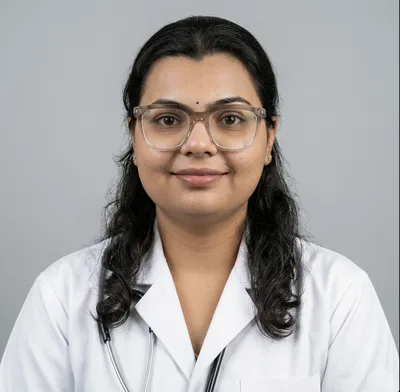
Dr. Purti Shukla · MPT (Sports)
“Post-stroke recovery is one of the most demanding journeys a family can go through. I have seen patients walk into the clinic on a wheelchair and walk out, months later, holding their grandchild. What changes everything is starting early, staying consistent, and being treated by a team that actually understands neurorehab. That is what we promise at Dynamics Mend, every single session.”
Final Thoughts
A stroke can shake the foundation of your life. But the first 90 days are not just about surviving. They are about rebuilding. What truly matters is:
- Starting physiotherapy as early as the doctor allows
- Choosing a clinic that specialises in stroke rehab, not general physiotherapy
- Staying consistent even when progress feels invisible
- Involving the family in home exercises from day one
The earlier you start, the more you regain. Recovery is a window, not a guarantee.
Ready to Begin Stroke Recovery?
Sector 52, Noida. At our clinic, or at your doorstep. Talk to our team and let us build a recovery plan around your specific stroke and stage.
Or request a callback. We'll reach out in 30 minutes
Free consultation. No obligation. Honest assessment.
Frequently Asked Questions
Honest answers to the questions our team gets most often from stroke patients and families across Noida, Sector 52, and surrounding sectors.
1. How soon should physiotherapy after stroke start?+
Stroke physiotherapy should ideally start within 24 to 72 hours of medical stabilisation. Early intervention is the single biggest predictor of how much function the patient regains. At Dynamics Mend, we begin with passive range-of-motion, positioning, and chest physiotherapy even when the patient is bed-bound, so the recovery clock starts moving on day one.
2. Which is the best physiotherapy clinic for stroke in Noida Sector 52?+
The best stroke physiotherapy clinic in Noida is one that specialises in neurorehabilitation, not general orthopaedic physio. Dynamics Mend, located in Sector 52 Noida, offers personalised post-stroke rehab plans, advanced modalities like FES and mirror therapy, and is led by Dr. Purti Shukla, MPT (Sports). We treat hemiplegia, hemiparesis, and aphasia patients across all three recovery stages, both in clinic and at home.
3. Is home physiotherapy for stroke patients in Noida effective?+
Yes. Home physiotherapy in Noida is highly effective for post-stroke patients, especially in the first 30 days when travel is hard, risky, or exhausting. Our home physiotherapists in Sector 52 Noida bring complete clinical equipment, deliver one-on-one supervised sessions, and train family members so the recovery continues between visits. For most stroke survivors, home physio is the most consistent way to stay on plan.
4. How long does it take to recover from a stroke with physiotherapy?+
Most stroke patients see meaningful recovery within 3 to 6 months, with the first 90 days being the most critical due to peak neuroplasticity. Mild strokes can recover near-fully in 1 to 3 months. Moderate to severe strokes often need 6 to 12 months of structured rehab. Recovery depends on stroke type, severity, age, and consistency of physiotherapy.
5. Can a stroke patient fully recover with physiotherapy alone?+
In many cases, yes. A large percentage of stroke survivors regain functional independence with consistent neuro physiotherapy, without needing additional surgery. Tablets manage risk factors, but real recovery of movement, balance, speech, and self-care comes from physiotherapy. Outcomes depend on early start, stroke severity, and how disciplined the rehab plan is followed.
6. Can a paralysed stroke patient walk again?+
Yes, most hemiplegic and hemiparetic patients can walk again with structured stroke rehabilitation. Gait training, sit-to-stand drills, FES, mirror therapy, and balance work gradually rebuild walking ability, with or without a walker or cane. We have helped many bed-bound stroke patients in Noida regain independent walking within 60 to 90 days of dedicated physiotherapy.
7. What is the cost of stroke physiotherapy in Noida?+
At Dynamics Mend in Sector 52 Noida, clinic-based stroke physiotherapy starts from around ₹800 per session, and home physiotherapy for stroke patients starts from around ₹1,200 per session. Both include assessment, treatment, family training, and progress monitoring under one fee, with no separate charges for IFT, TENS, mirror therapy, or rehab exercises.
8. How many physiotherapy sessions are needed after a stroke?+
Most post-stroke patients need 5 to 6 sessions per week in the first month, then 3 to 4 sessions per week through months 2 and 3. After the first 90 days, frequency tapers based on progress. A full neurorehabilitation cycle for stroke usually runs 30 to 60 sessions, reviewed every 4 weeks against measurable goals.
9. Does insurance cover post-stroke rehabilitation in India?+
Most major Indian health insurance plans cover post-discharge stroke rehabilitation for a fixed period, usually 30 to 60 days, depending on the policy. Coverage varies by insurer, policy type, and whether the rehab is OPD or home-based. Dynamics Mend provides full treatment documentation, prescriptions, and signed progress reports so families can file insurance claims without hassle.
10. What are the best stroke recovery exercises to do at home?+
Safe stroke recovery exercises at home include ankle pumps, knee bends, sit-to-stand practice, weight shifts, finger flexion drills, mirror therapy, and bed mobility work. The right combination depends on your stage and deficit. We strongly recommend starting any home exercise program only after a physiotherapist has built a personalised plan for you, since wrong exercises can worsen spasticity.
11. How is post-stroke spasticity treated through physiotherapy?+
Post-stroke spasticity, the tightness or stiffness in muscles after a stroke, is treated with stretching protocols, sustained positioning, mobilisation, FES, electrotherapy, and progressive strengthening of the opposing muscle group. In severe cases, your neurologist may add Botox injections, but physiotherapy stays the backbone of long-term spasticity control.
12. Does Dynamics Mend offer home physiotherapy near Sector 52, Noida?+
Yes. Dynamics Mend offers same-day home physiotherapy for stroke patients across Sector 50, 51, 52, 53, 55, 56, 58, 59, 60, 61, 62, 71 and 72 in Noida. Our therapists carry portable IFT, FES, and rehab equipment so each home session matches clinic-level quality.
Dr. Purti Shukla
Dr. Purti Shukla holds an MPT in Sports Physiotherapy and leads the clinical team at Dynamics Mend, Sector 52, Noida. She specialises in neurorehabilitation, post-stroke recovery, and complex disc conditions, and has designed personalised rehab plans for hundreds of patients across all three stages of stroke recovery.