
You searched ‘dry needling near me’ for a reason
Dry needling works fast for muscle pain because it goes straight to the source. A thin sterile needle is placed directly into the tight knot in your muscle, the knot releases, and the pain that was radiating out of it eases. At Dynamics Mend in Sector 52 Noida, Dr. Purti Shukla uses dry needling for stubborn back pain, neck stiffness, and sports injuries, often with relief showing up in the very first session.
That is the short answer. Now the honest version.
You probably did not wake up one day and decide to try needles. More likely, the pain has been hanging on for weeks. A knot in the shoulder that no amount of stretching touches. A lower back that locks up after long sitting. A calf that keeps cramping on your runs. You read somewhere that dry needling melts these knots, and now you want to know if it is real, if it hurts, and where to get it done properly near you.

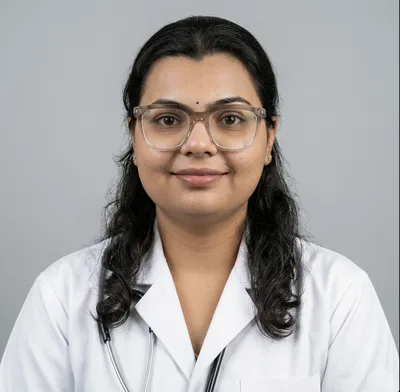
Dr. Purti Shukla performing dry needling therapy at Dynamics Mend, Sector 52 Noida
The problem with searching “dry needling near me” is the same problem as any pain search. Google shows you everything from a proper physiotherapy clinic to a spa offering it as a 20-minute extra. Same word, very different rooms. And when a needle is going into your muscle, the room you pick genuinely matters.
This guide tells you what dry needling actually is, how it works, what it helps, whether it hurts, the real side effects, and how it compares to cupping and acupuncture. By the end you will know exactly what to ask for, and whether it is worth coming to our Sector 52 Noida clinic for it.
What dry needling actually is
Dry needling is a physiotherapy technique that uses a very fine, sterile, single-use needle to release a trigger point. A trigger point is just a fancy name for a tight, irritable knot inside a muscle, the kind you can sometimes feel as a hard little lump that hurts when you press it.
The word “dry” simply means nothing is injected. No medicine, no fluid. The needle itself is the treatment. It is the same family of thin filament needle used in acupuncture, but the thinking behind where and why we place it is completely different.
Here is the part that surprises people. That painful knot in your shoulder is often not where the trouble started. A trigger point in your neck can send pain up into your head. A knot in your hip can refer pain down the back of your thigh and feel exactly like sciatica. Dry needling lets us reach the actual source muscle, not just chase the spot that hurts.
At Dynamics Mend, dry needling is never a standalone gimmick. It is one tool inside a proper physiotherapy plan, used when the assessment shows a trigger point is part of your problem.
How dry needling works, in plain words
Think of a muscle knot like a tangled section in a long rope. The fibres are bunched up, stuck in a contracted state, and they will not let go on their own. Massage and stretching pull on the whole rope, but they often cannot reach deep into that one tangled section.
The needle can. When it reaches the trigger point, the muscle often gives a quick involuntary twitch. We call this a local twitch response, and it is a good sign. That twitch is the knot finally releasing its grip.
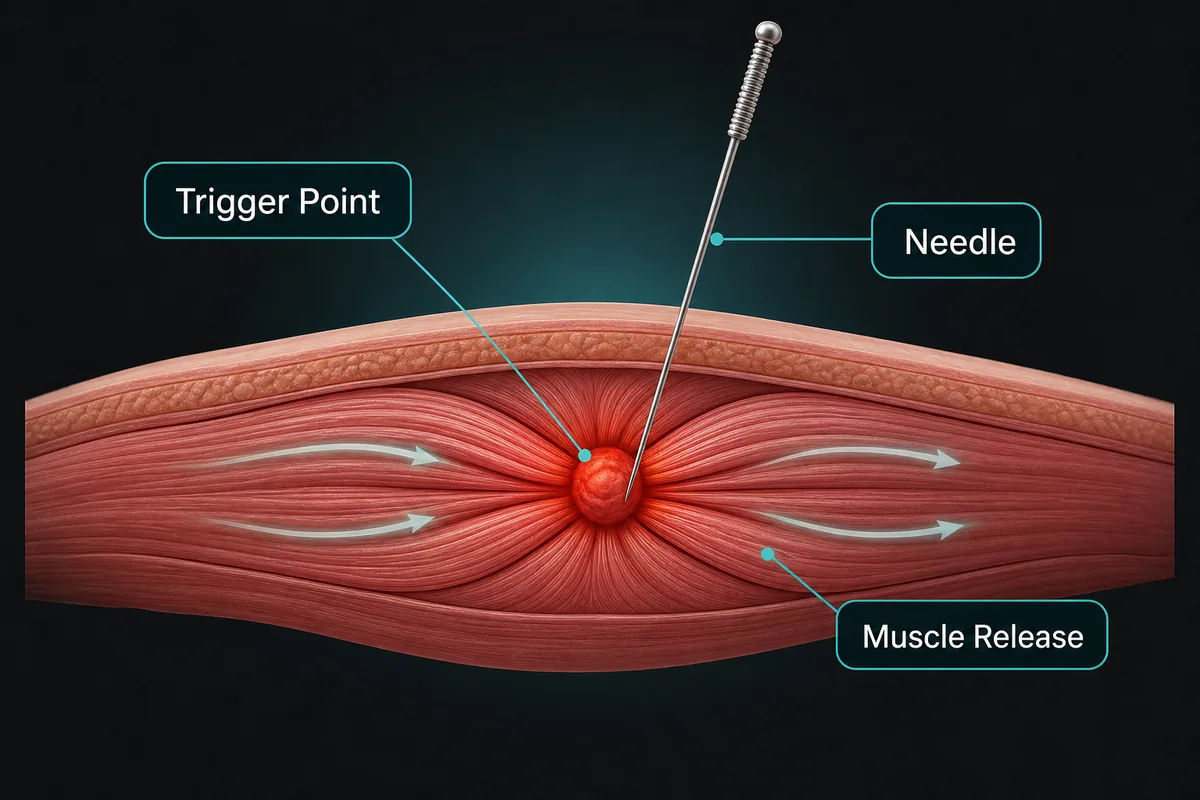
How dry needling works: the needle releases the trigger point (muscle knot) directly
Three useful things happen when that knot releases. The muscle relaxes and lengthens, so movement comes back. Fresh blood flows into an area that was choked and starved, which speeds up healing. And the constant pain signal the trigger point was firing into your nervous system quietens down.
The result is what patients describe as a strange relief, a heavy, locked area suddenly feeling loose and light. For a knot that has been there for weeks, that change in a single session feels almost unfair.
Important honesty though. The needle releases the knot, but it does not fix why the knot formed. If your posture, your training load, or a weak muscle group created that trigger point, it will come back unless those root causes are addressed too. That is exactly why we pair needling with movement correction and strengthening, not just repeat needling forever.
What dry needling helps the most
Neck and shoulder tightness from desk work
Easily the most common case we treat in Sector 52. Long hours at a laptop load the upper traps (the big muscle from neck to shoulder) and the small muscles at the base of the skull. They form trigger points that refer pain into the head and behind the eyes, which is why so many desk workers think they have a constant headache when the real source is a neck knot. Dry needling releases these fast. Combined with our desk job back pain programme, the relief actually holds.
Lower back pain and muscle spasm
That deep, gripping tightness in the lower back after long sitting, long drives, or lifting something wrong. Trigger points in the QL (quadratus lumborum, the deep side muscle of the lower back) and the glutes are common culprits, and they respond very well to needling. If your pain shoots down the leg with numbness or tingling, that points to a disc or nerve issue instead, and our PIVD stages and treatment guide is a better starting point.
Sports injuries and overused muscles
This is where Dr. Purti's sports physiotherapy training really matters. Tight calves that keep cramping, a hamstring that feels permanently shortened, a stubborn knot in the forearm from gripping. Dry needling clears these trigger points so the muscle can fire properly again. For athletes recovering from a real injury, we fold it into the full sports injury rehab plan rather than using it alone.
Tension headaches and jaw tightness
Many headaches that feel like they come from inside the skull actually start in the neck and jaw muscles. Releasing trigger points in the upper neck and around the jaw can ease headache patterns that painkillers never fully touched.
Frozen shoulder and rotator cuff tightness
As part of a plan, not as the whole plan. Needling reduces the muscle guarding around a stiff shoulder so the mobilization and exercise part of physiotherapy can go deeper. By itself it will not unstick a frozen shoulder, but inside a proper programme it noticeably speeds up the early phase.
Does dry needling hurt? And what about side effects?
This is the question almost everyone asks first, and the honest answer is reassuring.
The needle itself is hair-thin, far thinner than the needle used to draw blood or give an injection. Most people barely feel it enter the skin. What you do feel is the moment it reaches the trigger point, a quick deep twitch, a cramp-like sensation, or a dull ache that lasts a second or two. Then the muscle lets go and the area feels lighter. People often say it is a strange but satisfying feeling, not a painful one.
After the session, mild soreness in the treated muscle for 24 to 48 hours is normal, a lot like the day-after feeling from a good workout. A small bruise can appear occasionally. Some people feel a little tired right after. These settle quickly.
Serious side effects are rare when the technique is done by a trained physiotherapist using sterile, single-use needles, which is exactly how we do it at Dynamics Mend. We screen your history first, avoid risky areas entirely, and tell you precisely what to expect before a single needle goes in.
Dry needling vs cupping vs acupuncture
People mix these up constantly, so here is the clean version.
Dry needling vs acupuncture. They share the thin needle, but nothing else. Acupuncture comes from traditional Chinese medicine and works along energy lines called meridians. Dry needling is a modern physiotherapy technique aimed at a specific muscle knot, based on anatomy and your assessment. Different training, different reasoning, different goal.
Dry needling vs cupping. This is the one patients in Noida ask us most. They are not rivals, they do different jobs at different depths.
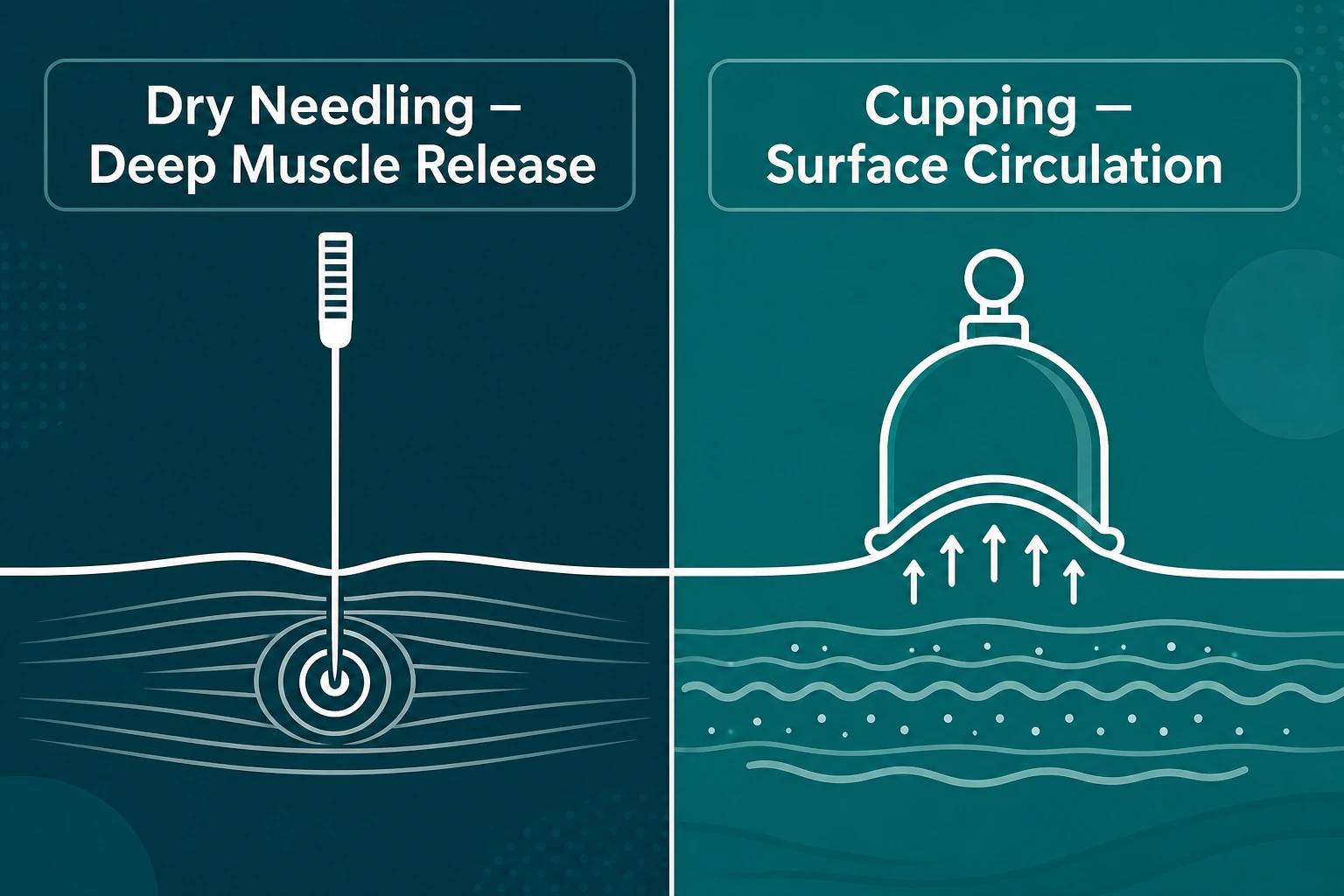
Dry needling vs cupping: different tools, different depths, often used together
Dry needling goes deep and precise. It reaches a single trigger point that a cup simply cannot get to, which makes it the better choice for stubborn, localised knots and nerve-irritating tight spots. Cupping works broader and more on the surface, lifting and decompressing a wider area of tissue, which makes it excellent for general tightness and sports recovery.
In practice, we often use both in the same plan, cupping to open up the whole region, needling to switch off the one knot that keeps coming back. If you want the full picture on the suction side, read our detailed guide to cupping therapy in Noida. After assessing you, we will tell you honestly which one, or which combination, your case actually needs.
How many sessions you actually need
Most people feel a clear difference after the first one or two sessions. That is the honest, repeatable pattern we see.
For a fresh, simple trigger point, sometimes one or two sessions is genuinely enough. For long-standing back or neck tightness that has been building for months, the usual plan is 3 to 5 sessions over 2 to 3 weeks. We space them so the muscle has time to settle between visits, and we always pair needling with a short home routine and some strengthening so the knot does not simply reform.
What we will never do is sell you a fixed 20-session package on day one. The right number depends on your assessment, how long you have had the problem, and how your body responds in the first couple of sessions. We tell you a realistic range after the first visit, and we tell you when you are done.
Got a knot that just will not release?
Book an assessment first. We will tell you honestly if dry needling is the right tool for your case, or if something else will hold longer. No upsell, no endless packages.
A case from our Sector 52 clinic
Illustrative example based on cases we commonly see at the clinic. Name and details changed.
Take Arjun. He is a 34-year-old software engineer working out of Sector 62, ten hours a day at his desk, and a weekend badminton player. For nearly four months he had a sharp, nagging knot in his right shoulder and neck that flared every afternoon and gave him a dull headache by evening. He had tried a pain spray, two oil massages, and a week of random YouTube stretches. Each gave him a day of relief, then the knot came straight back.
At his first visit, the assessment told the real story. His upper trap and levator scapulae (a muscle running from the neck to the shoulder blade) were locked with active trigger points, his deep neck muscles were weak, and his right shoulder was doing far more work than it should. Massage was never going to reach those knots. They were too deep.
The plan was three sessions of dry needling on the trigger points, paired with neck strengthening and a simple desk-posture fix he could do at his workstation. After the first session his afternoon headache was gone. By the third, the shoulder knot that had bothered him for four months had released, and it stayed released because we had also fixed the weak muscle letting it happen.
That was over two months ago. Arjun does five minutes of his neck routine on workdays and has not needed another session since. That is the real measure of good dry needling, relief that holds because the cause was fixed, not just the symptom poked.
Dr. Purti Shukla, who leads the clinic, is BPT and MPT (Sports Physiotherapy) with formal certification in dry needling and cupping. The full team has worked across post-surgery rehab, sports recovery, women's health, and chronic pain. Every needling plan at Dynamics Mend is built on that base, never added on top of a generic spa menu.
What your first dry needling visit at Dymend looks like
No surprises, no rushed sales talk, no upsell.
You walk in. We spend 5 to 10 minutes on your pain history, your work setup, your training, your sleep, and any imaging you have done. We do a movement screen, check your posture and range, and feel for the trigger points that are actually driving your pain. If dry needling is the right call, we explain exactly why and where the needles will go before we touch anything.
The needling itself is quick, usually a few minutes per muscle, often two or three muscles in a session. Most sessions also include manual therapy, mobilization, or a few corrective exercises so you get the most out of the released muscle. You walk out with two or three simple things to do at home for five minutes a day. That home routine is what makes the relief hold.
Honest dry needling pricing, in writing
Real numbers, no surprises. Here is exactly what dry needling costs at Dynamics Mend, Sector 52 Noida. Your first 30-minute teleconsultation is free, so you can hear our honest take on whether needling is even the right tool for your case before paying anything. Everything below includes a proper assessment, sterile single-use needles, and the time we actually spend on you.
| Service | Fee |
|---|---|
| First teleconsultation (30 min) | Free |
| In-clinic physiotherapy session assessment + all modalities | ₹500 to ₹800 |
| Dry needling session standalone | ₹800 to ₹1,000 |
| Dry needling + manual therapy combo | ₹1,200 |
| Dry needling + cupping combo | ₹1,200 |
| 3 session dry needling pack saves ₹300 | ₹2,700 |
| Home visit dry needling Sector 50, 51, 52, 62, 63 | ₹800 to ₹1,200 |
No package pressure, no hidden cost. If needling is not the right fit on the day, we say so and only charge for the time used. See our full pricing page for all services. We also offer home physiotherapy across the nearby sectors.
Is dry needling safe for you?
Yes, when it is done by a trained physiotherapist on the right person for the right reason.
At Dynamics Mend, every session uses sterile, single-use needles that are opened in front of you and disposed of after. The therapist works at a depth and pace your body is comfortable with, and stops the moment anything feels wrong. Each session begins with a quick screen so we know exactly which muscles need it that day.
Some people should pause or skip needling. If you are on blood thinners, have a bleeding disorder or very low platelets, have an active skin infection over the area, a strong fear of needles, or are pregnant, tell us at the first visit. In those cases we simply use other physiotherapy tools that get you the same result without the needle.
The golden rule is the same one that runs through this whole clinic. The needle is never the point. Getting you out of pain and keeping you there is.
Want a 30 minute callback?
Tell us what is going on. Dr. Purti or our senior physio will call back with an honest plan.
Frequently asked questions about dry needling in Noida
Is dry needling painful?+
For most people, no. The needle is hair-thin and you barely feel it going in. When it reaches a tight trigger point you may feel a quick deep twitch or a dull ache for a second, then the muscle releases and the area feels lighter. It is nothing like an injection. At Dynamics Mend in Sector 52 Noida, Dr. Purti Shukla works at a depth and pace your body is comfortable with, and stops the moment anything feels too much.
What is the difference between dry needling and acupuncture?+
They look similar because both use thin needles, but the thinking behind them is completely different. Acupuncture is part of traditional Chinese medicine and works along energy meridians. Dry needling is a modern physiotherapy technique that targets a specific muscle knot (trigger point) to release it directly. Dry needling is done by a trained physiotherapist as part of a treatment plan, not as a standalone ritual.
How many dry needling sessions do I need for back pain or neck pain?+
Most patients feel a clear shift after the first one or two sessions. For long-standing back or neck tightness, the usual plan is 3 to 5 sessions over 2 to 3 weeks, paired with a short home routine and strengthening. Once the underlying cause is corrected, most people do not need ongoing needling. We give you a realistic number after the first assessment, never a fixed 20-session package.
Are there side effects of dry needling?+
The common ones are mild and short-lived: slight soreness like after a workout for 24 to 48 hours, occasional minor bruising, and sometimes brief tiredness right after. Serious problems are rare when it is done by a qualified physiotherapist using sterile, single-use needles. We screen your history first, avoid risky areas, and tell you exactly what to expect before we start.
Where can I find dry needling near me in Sector 52 Noida?+
Dynamics Mend Physiotherapy at E-132, E-Block, Sector 52 Noida offers certified dry needling by Dr. Purti Shukla, MPT (Sports) and BPT, formally trained in dry needling. Every session uses sterile single-use needles and starts with a proper assessment. We are easy to reach from Sector 50, 51, 62, 63, 70 and Greater Noida West.
Dry needling vs cupping — which one is better for me?+
Neither is better overall, they do different jobs. Dry needling reaches deep trigger points a cup cannot touch, ideal for stubborn knots and nerve-irritating tight spots. Cupping lifts and decompresses a broader, more surface layer and is great for general tightness and recovery. We often use both in the same plan. After assessing you, we will tell you honestly which one your case actually needs. You can read more in our guide to cupping therapy in Noida.
Can dry needling help neck pain and desk-job stiffness?+
Yes, this is one of the most common cases we treat in Sector 52. Long hours at a laptop load the upper traps and neck muscles until they form trigger points that refer pain into the head and shoulders. Dry needling releases those knots fast, and when paired with posture correction the relief actually holds. It pairs especially well with our desk job back pain programme.
How much does dry needling cost in Noida?+
At Dynamics Mend, a standalone dry needling session is ₹800 to ₹1,000 and includes the assessment. A dry needling plus manual therapy or cupping combo is ₹1,200. A 3-session pack is ₹2,700. Home visit dry needling in nearby sectors is ₹800 to ₹1,200 per session. The first 30-minute teleconsultation is free, and the price never changes after you walk in.
Can I get dry needling at home in Noida?+
Yes, Dynamics Mend offers home physiotherapy including dry needling across Sector 50, 51, 52, 62, 63 Noida. The therapist arrives with sterile, single-use needles, does the full assessment at your home, and runs the same protocol as the clinic. It is useful for senior patients, post-surgery recovery, or anyone tied up with work-from-home days.
Ready to actually release that knot, not just chase it?
Come in for a real assessment. If dry needling is right for you, great. If something else will hold longer, we will tell you that too. No pressure, no upsell.
Open: 10 AM to 9:30 PM, Friday closed · E-132, E-Block, Sector 52, Noida 201301