
You searched ‘cupping therapy near me’ for a reason
Maybe your back has been knotted for weeks. Maybe your neck and traps feel like cement after 9 hours at the laptop. Maybe you saw the round marks on an athlete and thought, that is exactly what my shoulder needs right now.
Whatever brought you here, the search is honest. You want fast, hands-on relief. Not another month of ointments and YouTube stretches that change nothing.
The problem with the cupping search is that Google shows you everything from a 5 star hotel spa to a hijama centre to a random salon offering it as an add-on. Same word, completely different rooms. And when your spine, neck, or shoulder is involved, the room you pick actually matters.
Real talk, this guide tells you what cupping therapy actually does, when it works, when it does not, and how to spot a clinical setup from a cosmetic one. By the end, you will know exactly what to ask for, and whether it is worth coming to our Sector 52 Noida clinic for it.
If you have already tried this list, you are not alone
By the time most people land on a cupping page, they have already done a familiar lap.
Painkillers, hot water bag, a pain spray, maybe a session at a salon that did massage plus cupping in 45 minutes for a flat rate. Some relief for a day or two, then the same heaviness creeps back into the upper back.
We see this every week at our Sector 52 clinic. Software engineers from Sector 62 and 63. Mothers from Sector 50 and 51 carrying toddlers on one hip. Gym goers who started lifting heavy and now have a knot in the right rhomboid (the muscle between the shoulder blade and spine) that just will not release.
Here is the part nobody tells you. Cupping by itself is a wonderful tool, but it is one tool. If the underlying cause is a stiff thoracic spine (upper back) or a weak deep neck muscle, cupping calms the area for 2 to 3 days and the same tension rebuilds. Done inside a physiotherapy plan, the same cupping holds for weeks because the cause is being fixed at the same time.
That difference is the entire reason this page exists.
What cupping therapy actually does (in plain words)
Cupping is suction therapy. A cup is placed on the skin and air is removed from inside it, either by heat or by a manual pump. The skin and shallow muscle layer get gently pulled up into the cup.
That tiny lift does three useful things at once.
It pulls fresh blood into the tight area, the way wringing a sponge under a tap rinses it out. It separates the layers of fascia (the connective tissue that wraps every muscle) which often glue together when you sit in one posture too long. And it gives your nervous system a strong sensory signal that says, you are safe, stop guarding here.
The reason people swear by cupping is simple. Within 8 to 10 minutes, a muscle that has been guarded for weeks can let go. You stand up, roll your shoulders, and something just feels lighter.
Dry cupping vs wet cupping vs hijama, in one paragraph
Dry cupping is pure suction. No skin break, no bleeding, the classic round marks fade in 3 to 7 days. Wet cupping (often called hijama) involves tiny shallow scratches on the skin before cupping, so a small amount of blood is drawn out. At Dynamics Mend we use dry cupping inside a physiotherapy treatment plan. It is the version backed by the strongest sports medicine evidence and the version that pairs best with manual therapy and exercise. If you specifically need hijama for religious or cultural reasons, please go to a certified hijama centre, not us, because the goals and training are different.
What it helps the most, based on what we see in the clinic
Trapezius and neck tightness from desk work
Easily the most common case we treat in Sector 52. The traps (the big muscle from neck to shoulder) and the upper back stay loaded all day from screen work, laptop on lap, phone in one hand. Cupping on the upper traps and along the medial border of the scapula (inside edge of the shoulder blade) drops tone fast. Two or three sessions paired with proper posture cues, and most desk workers feel a real shift.
Lower back stiffness and dull aches
Not active sciatica, but that nagging heaviness in the lower back after long sitting, long drives, or after a heavy gym session. Cupping along the paraspinal muscles (the long muscles either side of the spine) and over the QL (quadratus lumborum, the deep side muscle of the lower back) gives quick relief. Combined with hip mobility work, the relief actually holds.
Sports recovery and over-trained muscles
Calves after a long run. Quads after leg day. Hamstrings after sprints. Cupping moves blood through, drops soreness, and often lets you train the next day instead of skipping a session. We see this with weekend runners in Sector 50, gym goers from 62 and 63, and a few semi-pro cricketers from the area. For athletes recovering from a structural injury, combine cupping with our full sports injury rehabilitation programme for best results.
Frozen shoulder and rotator cuff tightness
As an add-on, not the main treatment. Cupping over the deltoid and around the scapula helps reduce guarding so the mobilization and stretching part of physiotherapy actually goes deeper. By itself it will not unstick a frozen shoulder, but inside a proper plan, it noticeably speeds up the early phase. Read more about our frozen shoulder treatment in Noida.
Stress-related neck and headache patterns
The tight band across the upper back that builds during exam weeks, deadlines, or after a fight at home. Cupping plus 5 minutes of guided breathing brings the nervous system down fast. People walk out lighter than they walked in. It is almost the most under-rated use of cupping.
Where cupping will not help (please do not waste your money)
This is the part most ads will not tell you.
Cupping does not fix a slipped disc. It does not relieve true nerve pain shooting into the leg or hand. It does not heal a torn rotator cuff or a torn meniscus. It does not correct a forward head posture by itself. And it is not safe over fresh injuries, broken skin, varicose veins, or for anyone on blood thinners without a doctor's clearance.
If your pain shoots down the leg, if you have numbness in fingers, if you have lost grip strength, or if any movement makes the pain sharply worse, you do not need cupping first. You need a proper physiotherapy assessment to figure out what is actually going on. In those cases, our slip disc and nerve compression guide or our neuro physiotherapy guide is a more useful starting point. We do that assessment in the same clinic, in the same visit. Nothing is upsold for the sake of it.
Is cupping safe? The honest answer
Yes, when it is done by a trained physiotherapist on the right person for the right reason.
At Dynamics Mend, every cupping session uses sterile, single-use cups. The therapist controls suction by hand, not by guesswork. Each session is 25 to 35 minutes and always begins with a quick movement screen so we know what the muscles actually need that day.
You will see round marks. They are not bruises in the painful sense. They are pooled stagnant blood that the body clears in 3 to 7 days. Some areas mark darker than others, and that simply tells us where the tightness was sitting. The marks are not a measure of how well it worked.
People who should pause before cupping include anyone on blood thinners, pregnant women in the first trimester, anyone with active skin infection in the area, or anyone with very low platelets. Always tell us your full history at the first visit, and if anything is in doubt, we will skip cupping and use other tools.
A real case from our Sector 52 clinic
Take Neha. She is a 31 year old product manager who works out of Sector 62, sits 9 to 10 hours a day, and had been carrying upper back and neck tightness for almost 5 months. She had tried three salon massages, one fancy spa cupping in a hotel, and a pain spray every other night. Relief lasted a day, sometimes two.
First visit at Dynamics Mend, the assessment told us her thoracic spine (upper back) had almost no rotation, her deep neck flexors (the small muscles that hold your head up cleanly) were weak, and her right trap was doing the work of three muscles. Cupping alone was never going to hold for her.
The plan was simple. Three sessions of cupping combined with thoracic mobilization (gentle joint movement of the upper back) and a 6 minute daily home routine for the deep neck flexors and rhomboids. By session three she was clear of the daily heaviness. By week four she was sleeping through the night without a stiff neck in the morning.
That was three months back. She does the home routine for 5 minutes a day and has not needed another session since. That is the real measure of good cupping work. Relief that actually holds.
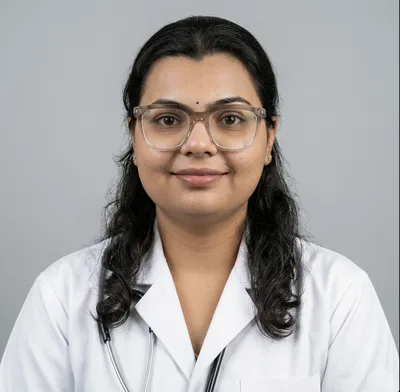
Dr. Purti Shukla, who leads the clinic, is BPT and MPT Sports Physiotherapy with formal certification in dry needling and cupping. The full clinical team has worked across post-surgery rehab, sports recovery, women's health, and chronic pain. Every cupping plan at Dynamics Mend is built on that base, not added on top of a generic spa menu.
Tightness been hanging around for weeks?
Book an assessment first. We will tell you honestly if cupping is the right tool for your case, or if something else will hold longer. No upsell, no 20 session packages.
What your first cupping visit at Dymend actually looks like
There is no surprise, no rushed sales talk, no upsell.
You walk in. We take 5 to 10 minutes to ask about your pain history, your work setup, sleep, training, any imaging you have done. We do a quick movement screen, look at your posture, check your range. If cupping is the right call, we tell you exactly why, and where on your body we will place the cups.
The cupping itself runs 8 to 12 minutes per area, usually 2 to 3 areas in one session. Most sessions also include 5 to 10 minutes of manual therapy or mobilization to get the most out of the released muscle. You walk out with 3 simple things to do at home for 5 minutes a day. That is how the relief holds.
Honest cupping pricing, in writing
Real numbers, no surprises. Here is exactly what cupping therapy costs at Dynamics Mend, Sector 52 Noida. Your first 30 minute teleconsultation is free, so you can hear our honest take on whether cupping is even the right tool for your case before paying anything. Everything below includes a proper assessment, sterile single-use cups, and the time we actually spend on you.
| Service | Fee |
|---|---|
| First teleconsultation (30 min) | Free |
| In-clinic physiotherapy session assessment + all modalities | ₹500 to ₹800 |
| Cupping therapy session standalone | ₹800 to ₹1,000 |
| Cupping + manual therapy combo | ₹1,200 |
| Cupping + dry needling combo | ₹1,200 |
| 3 session cupping pack saves ₹300 | ₹2,700 |
| Home visit cupping Sector 50, 51, 52, 62, 63 | ₹800 to ₹1,200 |
No package pressure, no hidden cost. If a session is not the right fit on the day, we say so and only charge for the time used.
Muscle Relaxing Therapy at Dynamics Mend
If your tightness is not stuck in one spot but spread across the body, like a stiff back plus heavy legs after a long week, or full body fatigue that just will not let go, cupping alone is not enough. Muscle Relaxing Therapy is built for exactly this. One structured session that combines seven clinical techniques in a planned order, not random tools thrown together. You walk in heavy, you walk out lighter, and the relief actually holds because we work the whole soft tissue system, not just the painful spot.
Seven clinical techniques, one structured protocol
- IASTMInstrument Assisted Soft Tissue Mobilization. Special tools that release stubborn tissue layers cupping alone cannot reach.
- DFRDeep Friction Release. Targeted pressure on chronic adhesions and scar tissue.
- MFRMyofascial Release. Full body fascia work that breaks the holding patterns behind recurring tightness.
- PostureReal-time cues so your body stops loading the wrong muscles.
- CupsExercise with cups. Guided movements while cups are in place to deepen the release.
- Hot PackPreps the tissue and calms the nervous system before the deeper work.
- If neededDry needling, added only when stubborn trigger points need it, sterile single-use needles.
| Coverage Area | Fee |
|---|---|
| Back cervical + lumbar | ₹1,200 |
| Legs glutes + hamstrings + calves | ₹1,200 |
| Back + Legs combo saves ₹200 | ₹2,200 |
| Full body back + legs + arms + glutes + neck, saves ₹600 | ₹3,000 |
Done by Dr. Purti Shukla and the trained team, every session built on a proper assessment first, never a one-size-fits-all menu. See our full pricing page for all services.
How to pick a real cupping therapy place near you
Quick checklist before you book anywhere.
- The person doing cupping should be a qualified physiotherapist or a certified hijama practitioner. Ask, you have the right to know.
- Single-use cups every time. No exception, no shortcut.
- They should do a 5 minute assessment before applying any cup. Anyone who walks in and starts cupping without checking your movement is treating you like a number.
- Clear pricing, in writing. Real clinics do not need to be vague.
- They should tell you, honestly, when cupping is not the answer. A place that says yes to everything is not a place you want to be.
If a clinic ticks all five, you are in safe hands. Dynamics Mend was built around exactly these rules.
Want a 30 minute callback?
Tell us what is going on. Dr. Purti or our senior physio will call back with an honest plan.
Frequently asked questions about cupping therapy in Noida
Is cupping therapy really effective for back pain and neck pain?+
Yes, for most cases of muscular back pain and desk-job neck stiffness, cupping gives 50 to 70 percent relief in the very first session. When it is done as part of a physiotherapy plan in Noida, the results hold for weeks instead of days. It is not the right answer for slip disc pain, true sciatica, or torn structures, and a proper assessment will tell you which group you are in.
Where can I find the best cupping therapy near me in Sector 52 Noida?+
Dynamics Mend Physiotherapy in Sector 52 Noida offers certified cupping therapy done by Dr. Sidharth Narayan, the clinic's cupping therapy specialist, under the supervision of founder Dr. Purti Shukla, MPT Sports and BPT. The clinic uses single-use sterile cups, runs a proper assessment before every session, and combines cupping with manual therapy when the case needs it. We are at E-132, E-Block, Sector 52 Noida, easy to reach from Sector 50, 51, 62, 63, 70 and Greater Noida West.
How many cupping sessions do I need to feel real relief?+
Most patients feel a clear shift in the first session itself. For long-standing tightness, the usual plan is 3 to 5 sessions over 2 to 3 weeks, paired with a short home routine. Once the underlying cause is corrected, most people do not need ongoing sessions. We will tell you a realistic number after the first visit, not before.
Does cupping therapy hurt? And are the marks safe?+
Cupping itself is not painful. You feel a strong pulling sensation for a few seconds, then the area starts to relax. The round marks are pooled stagnant blood and clear in 3 to 7 days. They are not bruises in the painful sense, and they are not a measure of how well the session worked. Some areas mark darker simply because they are tighter.
Is there a difference between cupping at a clinic and at a salon?+
A meaningful one. A trained physiotherapist will assess your movement, identify the actual cause, place cups in clinical patterns, and pair them with manual therapy or mobilization. A salon mostly treats cupping as a relaxation add-on with no diagnosis. For real pain that has lasted more than two weeks, a clinical setup gives results that actually hold.
Can I get cupping therapy at home in Noida?+
Yes, Dynamics Mend offers home physiotherapy and cupping in Sector 50, 51, 52, 62, 63 Noida. The therapist arrives with sterile, single-use cups, does the assessment in your living room, and runs the same protocol as the clinic. Useful for senior patients, post-surgery recovery, or anyone tied up with work-from-home days.
Is cupping therapy safe during pregnancy or while on blood thinners?+
Pregnancy in the first trimester, blood thinning medication, very low platelet counts, active skin infections, and any unhealed wound in the target area are all reasons we will skip cupping. We always ask your full history at the first visit. If cupping is not safe for you, we will use other physiotherapy tools that are.
What is the difference between dry cupping and wet cupping (hijama)?+
Dry cupping is pure suction with no skin break. Wet cupping, often called hijama, involves tiny shallow scratches on the skin before cupping, so a small amount of blood is drawn out. At Dynamics Mend we offer dry cupping only, as part of a physiotherapy treatment plan. For hijama specifically, please go to a certified hijama practitioner. The goals and training are different.
How much does cupping therapy cost in Noida?+
At Dynamics Mend, a standalone cupping session is ₹800 to ₹1,000 and includes the assessment. Cupping combined with manual therapy or dry needling is ₹1,200. A 3 session pack is ₹2,700. Home visit cupping in nearby sectors is ₹800 to ₹1,200 per session. If cupping is part of a physiotherapy plan we are already treating you for, it is included in the normal ₹500 to ₹800 session fee. The first 30 minute teleconsultation is free, and pricing never changes after you walk in.
Can cupping help with sports recovery for runners and gym goers?+
Yes, this is one of the most useful applications. After long runs, leg day, or sprint sessions, cupping moves blood through tight calves, quads, and hamstrings, drops soreness, and often lets you train the next day. Many weekend runners and lifters across Sector 50, 62, and 63 Noida use it as part of their weekly recovery.
Ready to actually feel relief, not just chase it?
Come in for a real assessment. If cupping is right for you, great. If something else will hold longer, we will tell you that too. No pressure, no upsell.
Open: 10 AM to 9:30 PM, Friday closed · E-132, E-Block, Sector 52, Noida 201301